
Bhutan is a little piece of heaven on earth, a virtually untouched world where spirituality is still the way of life, where time moves at a slow and peaceful rhythm, and nature is bestowed the respect it deserves. Its pastoral valleys are dominated by 16th-century castle-like monasteries inhabited by red-robed lamas, and nomadic yak herders roam the high mountain valleys.
Bhutan is a little piece of heaven on earth, a virtually untouched world where spirituality is still the way of life, where time moves at a slow and peaceful rhythm, and nature is bestowed the respect it deserves. Its pastoral valleys are dominated by 16th-century castle-like monasteries inhabited by red-robed lamas, and nomadic yak herders roam the high mountain valleys.
Drive to Kathmandu Airport from your Hotel in Kathmandu, then fly to Paro by Druck Air or Bhutan Airlines. After completing your immigration formalities, you will be welcomed by our representative, who will be your tour guide throughout your tour. Then drive to Thimphu, the largest and capital city of the country, On arrival at Thimphu, check into your hotel, and after refreshments, visit the following attraction around the city:
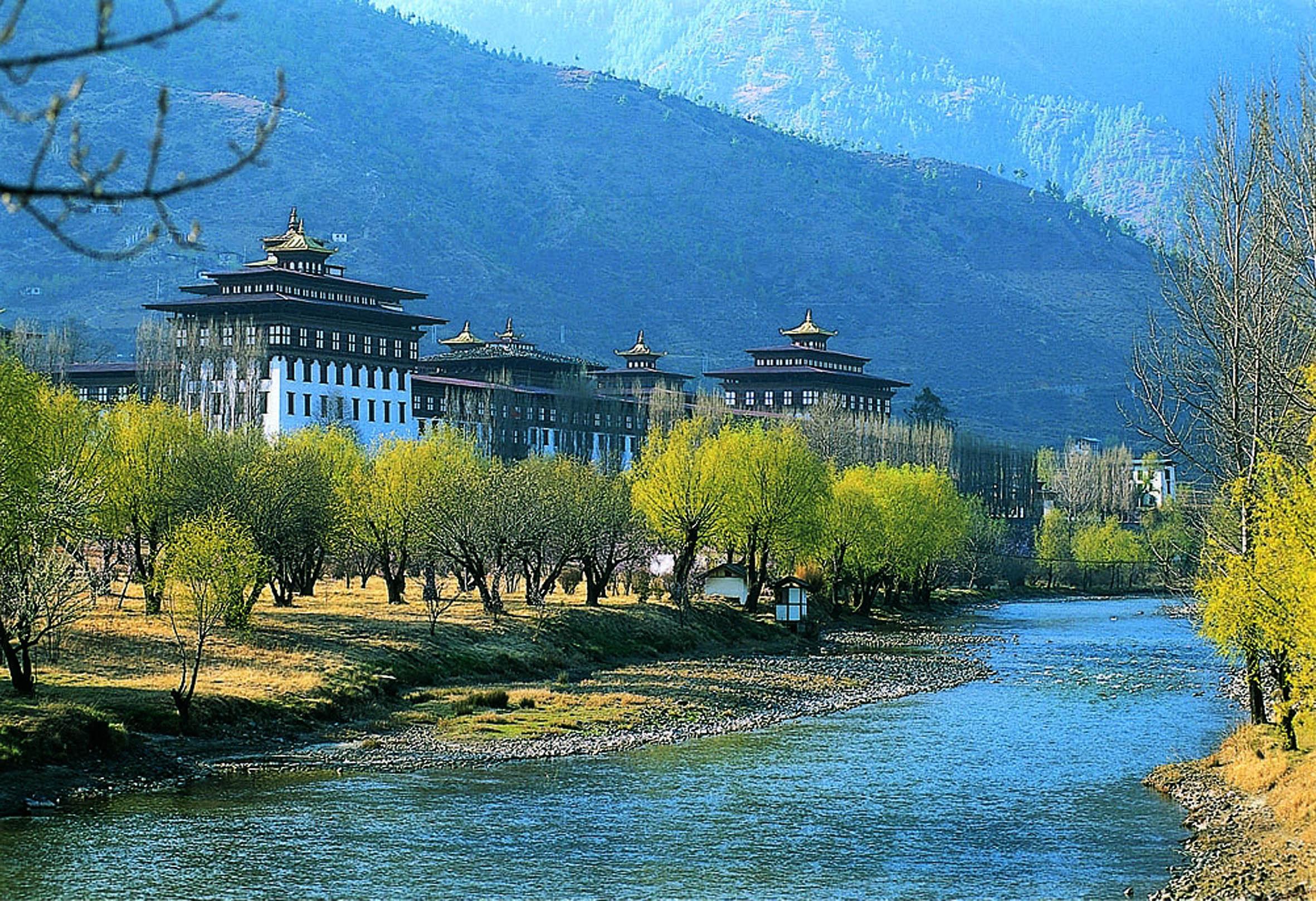
Tashichho Dzong: The Tashichho Dzong is a Buddhist Monastery and fortress at the northern edge of Thimphu.
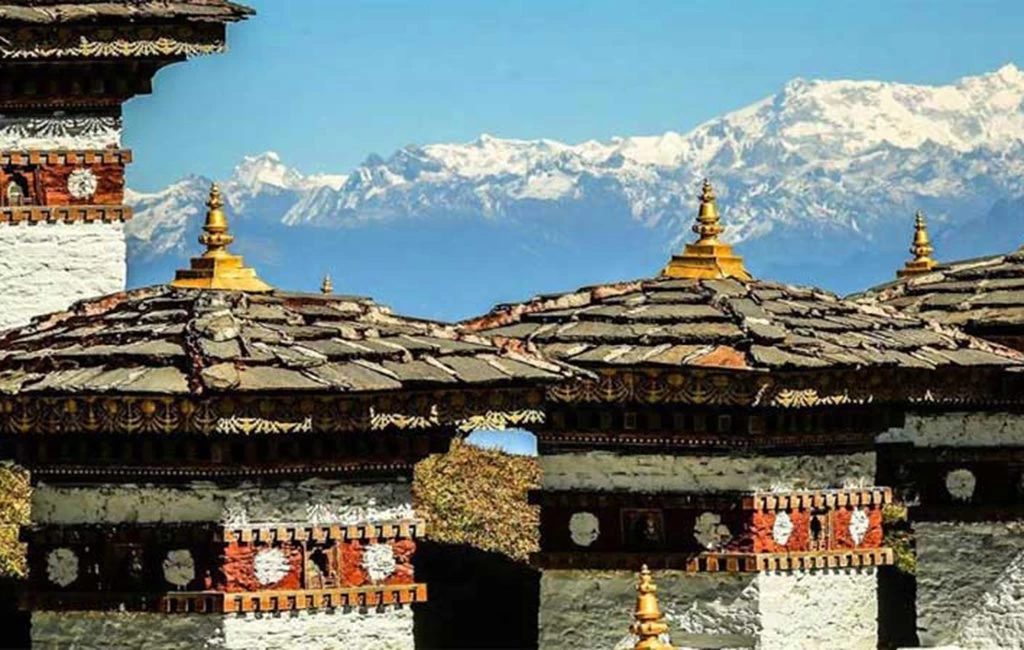
National Memorial Chorten: The Memorial Chorten was built by Bhuntan’s Thrid King H.M. Jigme Dorji Wangchuk, who is also known as the father of modern Bhutan. He wanted to erect a monument carrying the message of world peace and prosperity
Overnight at Thimphu (Mantra Home/Hotel Lhayul or Similar Property)
On the second day of the Bhutan Tour, you will be heading towards Paro, and on the way to Paro, you will explore the first Dzong of Bhutan: Simtokha Dzong, a small Dzong situated approximately 5 kilometers south of Thimphu. The Dzong is officially called the Sangak Zabhon Phodrang which roughly translates to the Palace of the Profound Meaning of Secret Mantras. The Simtokha Dzong is said to be the first fortress to have been built by the legendary Zhabdrung Ngawang Namgyal in Bhutan. The fortress was constructed in the year 1629 AD. Following the attraction, you will explore:
Folk Heritage Museum: Just opened to the general public in 2001 upon completion. It treasures troves of culture and rich Bhutanese heritage, providing rich insights into the Bhutanese ethos.
National Textile Museum: The second important Museum that also opened its doors in 2001 is the National Textile Museum of Bhutan. During a trip to this museum, you will get an up close and personal experience of the living national art of weaving.
Kuensel Phodrang, explore the towering Buddha statue and enjoy the panoramic view of Thimphu Valley. Craft Bazaar: the iconic place to witness Bhutanese culture and buy Bhutan-made art and craft Products.
Takin Preserve: which houses the national animal, the Takin, that is only found in Bhutan. This is an extremely rare member of the goat family. It eats grass and bamboo. Institute of Zoring Chusum: Generally Known as an Art and craft school or Painting School, the institute offers a six-year course on the 13 traditional arts and crafts of Bhutan.
National Sport of Bhutan (Archery): one of the best places to witness a game of traditional and modern archery. Later in the evening, you will drive to Paro. Stay at Paro (Gawling Hotel/Paro Grand/Hotel Kuenphen or similar property).
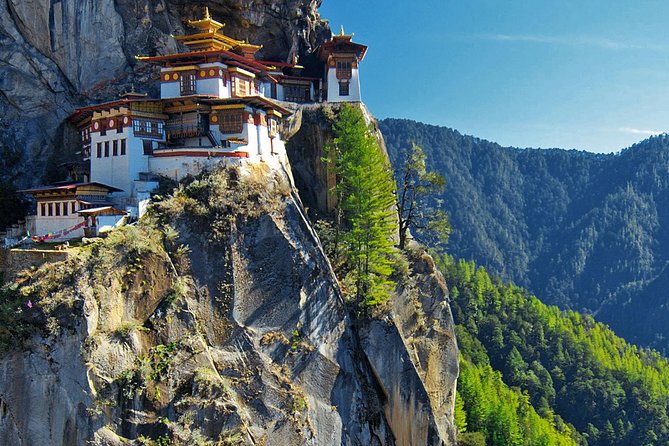
After Breakfast, we will take you for a morning hike to the most sacred Taktsang Monastery, also known as “Tiger’s Nest”. Hanging precariously and magically from a rather steep cliff, it is a monument of genuine pride for the Bhutanese nation. After the road, the hike toward Taktshang follows an uphill route and takes approximately 3–4 hours at an average walking speed on a clear and sunny day. Sunscreen, glass, hiking poles, large quantities of drinking water, and hats are recommended for this hike. After exploring the site of this iconic monument, we will be visiting the following:
Kyichu Lhakhang: The Jowo Temple of Kyichu is one of the oldest temples in Bhutan. The temple was built by the Tibetan King Songsten Gampo in the 7th Century AD.
Ta Dzong (National Museum of Bhutan): The National Museum of Bhutan is housed inside the six-story circular Ta Dzong. The Ta Dzong is a medieval watch tower situated above the Rimpung Dzong. The Ta Dzong was constructed in 1656.
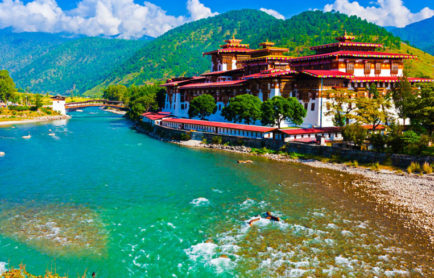
Rimpung Dzon: The Paro Dzong is probably Bhutan's best-known and most iconic Dzong. This is probably the first building you will notice when you land at Paro International Airport and will probably be your first memory of Bhutan. The imposing Dzong is perhaps the finest example of Dzong architecture existing in the world today, the massive buttered walls of the fortress dominate over the valley. The Rinpung Dzong's name translates to "Fortress on a heap of Jewels ". The fortress was constructed in 1644 by Zhabdrung Ngawang Namgyal.
In the evening, we will visit the local market of Paro and overnight in a hotel in Paro (Gawling Hotel/Paro Grand/Hotel Kuenphen or similar Property)
After breakfast we will drive to Paro airport for the departure, after the plane landed in Kathmandu we will drop you at the hotel in Kathmandu.
Enter a recent customer’s contact info and we’ll ask them to leave you a review.


